Physical Output
Creatine in the Active Man's Routine: An Editorial Overview
Marcus Chen · 3 February 2026 · 11 min read

Among the combinations that appear with notable regularity in men's daily supplementation records, the pairing of vitamin D and magnesium stands out not for its novelty but for its persistence. Published nutritional research has observed this combination across multiple cohorts of physically active men, and the editorial record reflects a consistent interest in understanding how these two compounds relate to each other within a morning routine.
Vitamin D appears in supplementation surveys with a frequency that reflects its status as one of the most widely discussed micronutrients in men's nutritional awareness. Its role in supporting daily energy rhythm and overall nutritional balance has been the subject of considerable published research, particularly in populations that spend limited time outdoors or live in regions with reduced seasonal sunlight exposure.
What is less commonly emphasised in editorial coverage is that the body's processing of vitamin D is closely tied to magnesium availability. Several published studies in nutritional biochemistry have documented that magnesium acts as a cofactor in the conversion of vitamin D to its active form. This relationship is not widely appreciated among general readers, but it appears consistently in the research literature and has begun to influence how informed supplementers approach their morning stacks.
The practical implication documented in these papers is straightforward: introducing vitamin D supplementation without adequate magnesium may yield a different outcome than the combination. For active men who train regularly and are monitoring their nutritional habits, this pairing has become a standard entry point in the supplementation conversation.
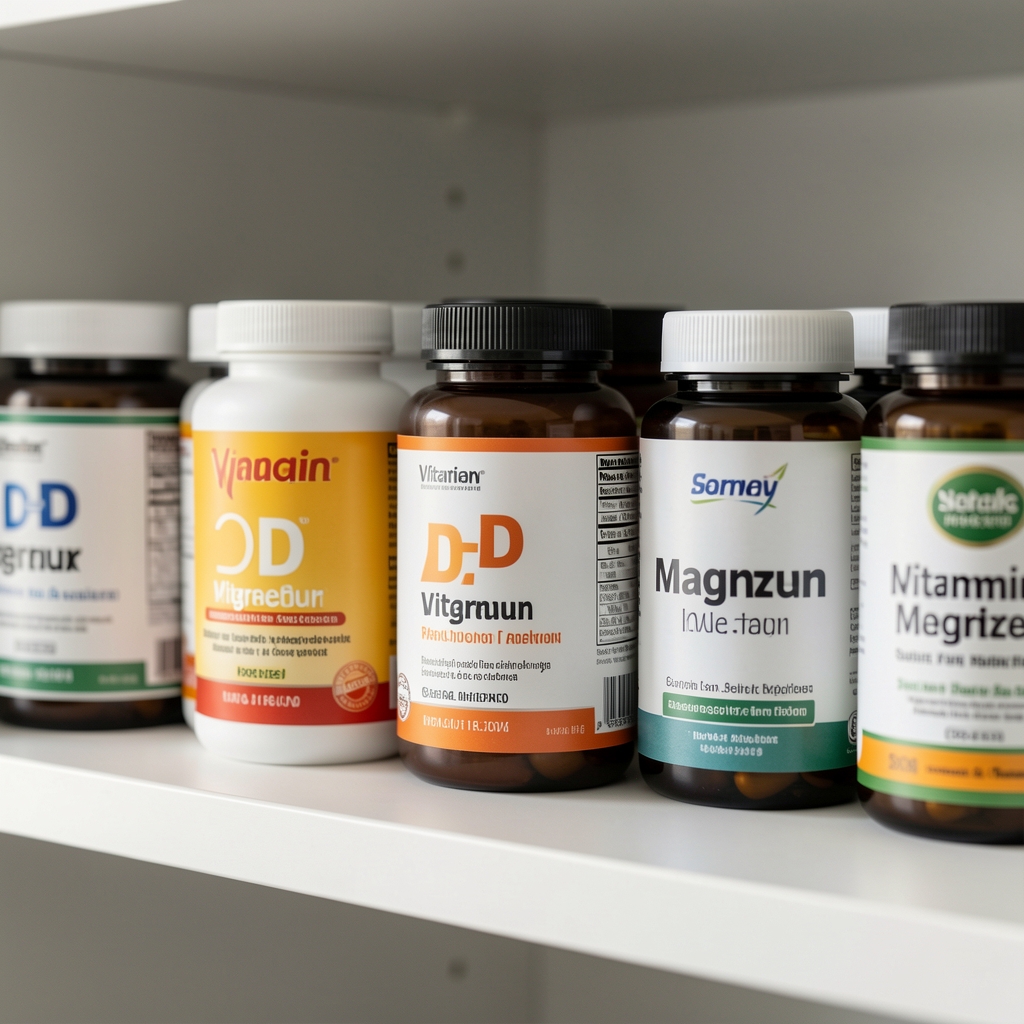
Supplement containers on a shelf, editorial composition — Jakarta, 2026
A review published in the journal of nutritional biochemistry documented that approximately half of the adult population in various cohorts was found to have suboptimal magnesium intake, independent of supplementation status. The same review noted that vitamin D insufficiency was among the most commonly reported nutritional observations in physically active adult men. The co-occurrence of these two patterns in published literature has led several editorial teams in the nutritional wellness space to document the combination more rigorously.
It is worth noting what the research does not say. The published literature does not assert that supplementing these two compounds together produces outcomes beyond what would be expected from adequate levels of each independently. The observation is more foundational: the conversion pathway for vitamin D requires magnesium, so if a reader's daily intake does not include sufficient magnesium, the vitamin D supplement's effect on overall nutritional balance may be limited.
This is an important editorial distinction. The Elarok Journal does not publish content suggesting that specific supplement combinations produce dramatic or assured shifts in wellbeing. The editorial position is that awareness of how nutrients interact is itself valuable knowledge for men building consistent supplementation habits.
"The editorial record reflects a consistent interest in understanding how vitamin D and magnesium relate to each other within a morning routine."
Elarok Journal, Vol. I — January 2026
Beyond its relationship with vitamin D, magnesium carries its own documented presence in men's nutritional habits as a support for muscle recovery rhythm after physical activity. Active men who engage in resistance training or endurance activity have been among the more consistent participants in published supplementation surveys, and magnesium appears in their documented daily stacks with notable frequency.
Several forms of magnesium exist in the supplement market, and the published literature has observed some differences between them in terms of how they are absorbed. Magnesium glycinate and magnesium citrate appear most frequently in the research on bioavailability, while magnesium oxide, though widely available, is documented in several reviews as having a lower absorption rate in typical supplementation contexts.
The morning timing of magnesium supplementation is a common editorial subject, but several nutritional researchers have noted that the published evidence for a specific optimal time is limited. The pattern most often observed in supplementation logs reviewed editorially is that consistency of intake, rather than precise timing, tends to be the more significant variable in long-term routine building.
For men documenting their first structured supplementation routine, the vitamin D and magnesium pairing represents a relatively low-complexity entry point. Neither compound requires complex dosing protocols by the standards documented in the nutritional literature, and both are available without formulation specialisation. Published guidance on daily intake levels varies by source, and the Elarok Journal recommends that readers with specific requirements speak with a qualified wellness or nutrition professional before introducing any new habit or routine to their daily life.
The editorial observation from reviewing multiple men's supplementation logs is that this combination is often introduced not as the result of targeted research but as an accumulated awareness. Readers document having encountered the vitamin D and magnesium pairing across multiple editorial sources and having gradually internalised its logic before adding it to their own routine. This pattern of gradual adoption over a period of weeks or months is, in the journal's observation, characteristic of more consistent supplementation habits generally.
The journal will continue to document observations on this combination as further peer-reviewed literature becomes available. Readers who identify relevant published research are encouraged to submit references via the contact form for editorial review.